
Jade is the lifeblood of Kekon, a gemstone that can give a warrior supernatural speed, strength and perception. Its mining and distribution are controlled by two clans locked in a vicious turf war over the nation’s capital city of Janloon. But the superpower nations of the world are starting to realise the potential of Jade for their own armies and setting their sites on the island nation, presenting threats of invasion and cultural dominance but also unprecedented economic opportunity for the two big green bone clans.
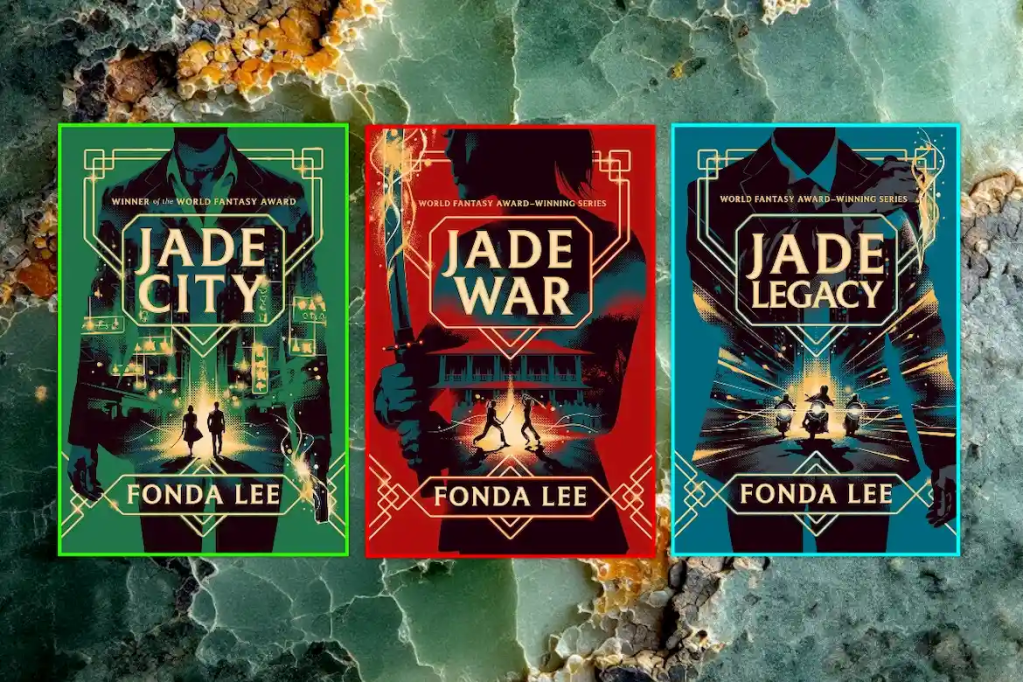
Fonda Lee’s Green Bone Saga has become an instant favourite over the month and a half it took me to read it. It mixes genre tropes and worldbuilding ideas from a variety of unconventional sources to construct a fantasy experience that feels totally fresh. Gritty mafia and yakuza elements combine with magic kung fu in city that most closely resembles 1970s Hong Kong in an epic that spans decades and continents but somehow never stops being about the battle for the streets of Janloon and the internal drama of its main family.
The story follows four members of the Kaul Family, leading house of the No Peak Clan. Lan has recently been made head of the whole operation through the death of his father and retirement of his grandfather. He’s trained his whole life for this, but is struggling to assert his own authority and pull the loyalty of his lieutenants away from Grandda. His younger brother Hilo is a leader of the clan’s street level soldiers. A man with a violet, thuggish reputation that’s not undserved but belies a more sensitive side and a tendency to take in the disenfranchised. The youngest Kaul child, Shae, is returning to Janloon after rebelling, giving up her jade and studying overseas for several years. She’s determined to make her own way apart from the clan, even as her older brothers realise how valuable her education could be for their operations. Finally, the siblings’ cousin Anden is in his final year of training to be a jade warrior. He has the technical skills, but being bookish and gay makes him an uncomfortable fit in the testosterone-filled world of the green bones.
These characters are not heroes. All are flawed and conflicted and can be pressured into moral compromise (if they don’t run toward it willingly). You can easily see how they could be the villains in anyone else’s story. But they’re layered, nuanced and believable, and I was fascinated to watch them navigate the trecherous waters of clan life. Martial arts action is big in the summaries and marketing of these books, but keep the gangster elements close to their hearts; a warrior is as likely to die via ambush and assassination as an honourable duel. Death can be sudden and shocking, and no one is truly safe.
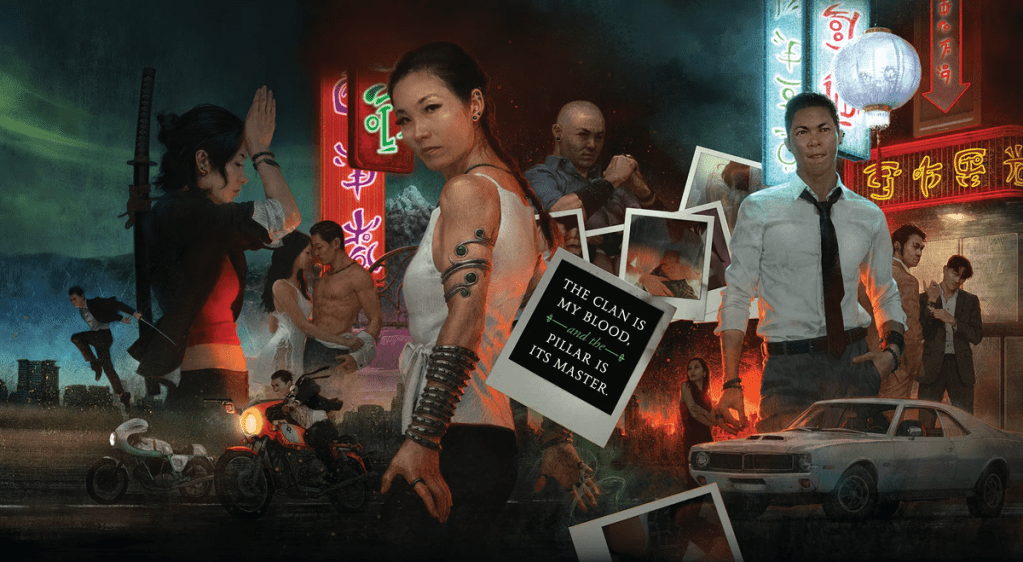
Each book builds on the last to grow the scope. The first one is locked in on the streets of Janloon. The second one expands to show the wilder world, providing political and economical context to the core conflict, playing on ideas of proxy wars (both on battlefields and in social movements) fought by larger nations and telling the stories of Kekonese migrants on foreign shores. The third one adds time to the equation, introducing larger and larger forward jumps between major events to show how cultures, technologies, laws and international relations growing and shifting. The result is a believable world alive with texture from the street level crime up to the executive boardrooms.
Lee’s prose is direct and unpoetic but tells the story effectively. Her biggest weakness as a writer is overexplaining. After a tense negotiation your POV character will often then mentally walk through the veiled threats and powerplays of the talk and explain who gained and lost ground at what points in a way that made me feel like I wasn’t being trusted to read between the lines myself. This is useful early on when we’re still learning the culture, but it outstayed its welcome.
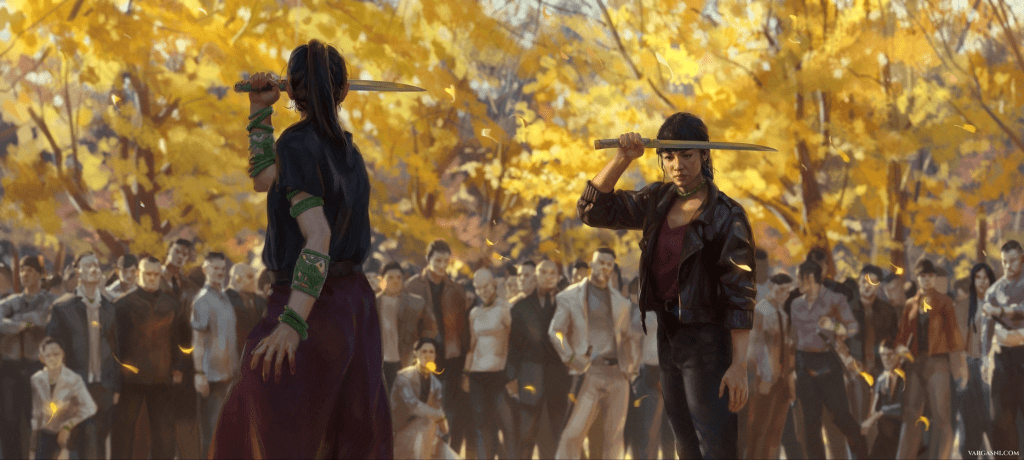
The third book’s ambitious timeline also means sometimes moving forward by years when as a reader I would have really liked to stay and explore the fallout of the latest development. It was frustrating to feel like there were whole other books worth of material in there I wasn’t getting to see. I would have loved to have seen the younger characters given more POV time to really drive their arcs home.
But the ending is powerful and emotionally resonant. The series has left a glowing impression on me as a reader. Easy recommend for anyone looking for fantasy that feels a bit different. Expect violence, sex, drugs and moral ambiguity, and some animal death (mostly mice, but cockfights are regularly alluded to as a popular activity in Kekon). It also feels like the kind of books that would make killer TV if the right studio picked them up.
 Captain M Entertainment
Leave a comment